What Is a Dental Crown? A Complete Guide to Restoring Your Smile

What if you could give your damaged tooth a custom-fitted "helmet" that looks just like your natural smile while ending the cycle of constant repairs? If you've been nursing a cracked tooth or a large, failing filling, you're likely feeling a mix of worry about potential pain and confusion over the best way to save your tooth. It's completely normal to feel a bit anxious about restorative care, especially when you're trying to balance your budget with the desire for a lasting solution that feels natural.
Many patients come to our Dundalk practice asking exactly what is a dental crown and whether it's truly necessary compared to a standard filling. We understand that your smile is a vital part of your confidence; we've put together this complete guide to help you make an informed decision. You'll discover the different materials available, the step-by-step procedure for a pain-free restoration, and how these durable solutions protect your oral health for years to come. From learning why ceramic crowns often last 12 to 20 years to understanding how insurance typically covers 50% of restorative costs, we're here to ensure you feel cared for and confident. Let's explore how we can restore your smile right here in our local community.
Key Takeaways
- Understand exactly what is a dental crown and how this custom restoration acts as a protective shield for teeth weakened by decay or large, failing fillings.
- Learn why professional restorations are vital after root canal treatments to prevent brittleness and ensure your smile remains strong for the long haul.
- Compare the clinical benefits of porcelain and zirconia to choose a material that matches your aesthetic goals while providing durable, reliable support.
- Prepare for a comfortable, stress-free experience by walking through the gentle steps of the procedure from the initial shaping to the final placement.
- Discover practical tips for maintaining your oral health in Dundalk to keep your new crown looking bright and feeling natural for decades.
Table of Contents
Understanding Dental Crowns: More Than Just a 'Cap'
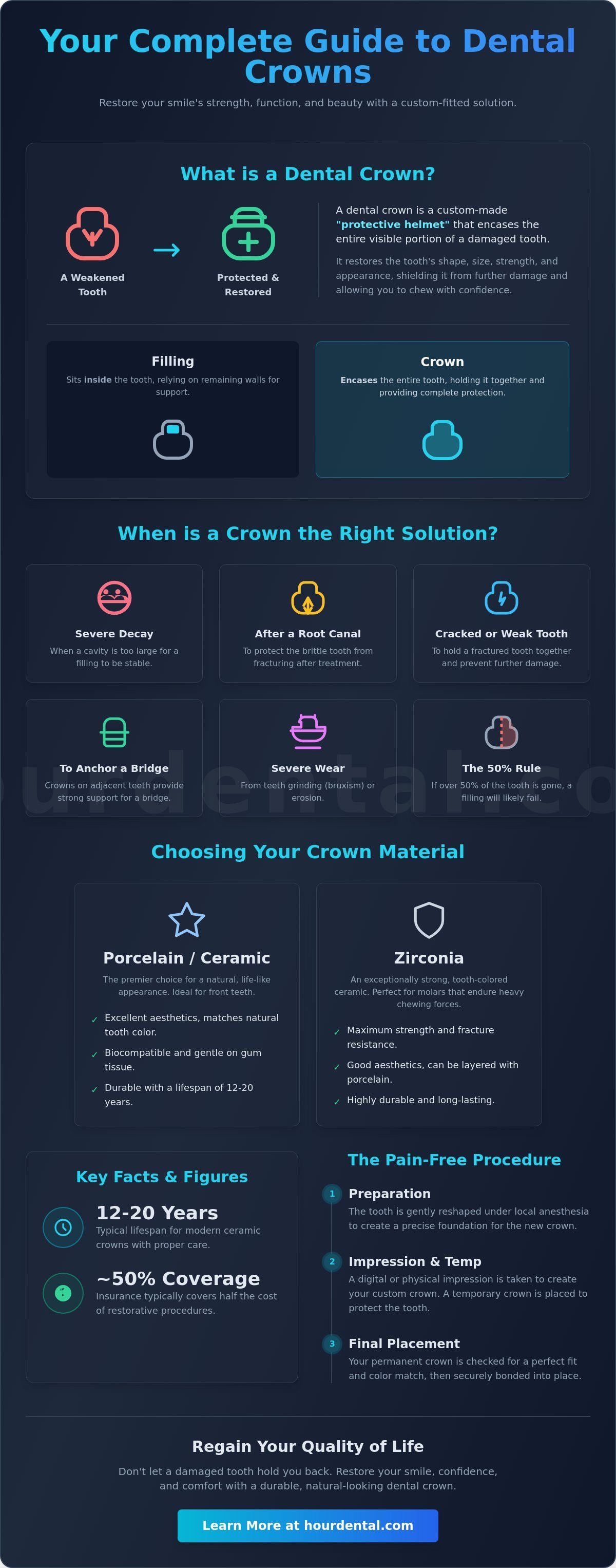
When a tooth is damaged by deep decay or a sudden fracture, you might find yourself asking exactly what is a dental crown and how it differs from a standard repair. Think of it as a custom-made restoration that fits over the entire visible portion of your tooth, acting as a "protective helmet." While a filling sits inside the tooth structure, a crown encases it completely. This shields the underlying tooth from further cracks while restoring your ability to chew and speak with total confidence. For those interested in the technical evolution of these restorations, this comprehensive guide to dental crowns offers a deep dive into the clinical history and mechanics of the procedure.
Beyond the clinical function, there's a significant emotional relief that comes with this treatment. Many of our neighbors in Dundalk tell us that before their crown, they avoided smiling in photos or hesitated to order their favorite meals at local restaurants. Once the crown is in place, that anxiety disappears. You aren't just getting a "cap"; you're regaining your quality of life. Our goal is to provide a safe haven where you can restore your smile without the fear of future dental emergencies.
Crown vs. Filling: When a Patch Isn't Enough
A common question we hear at our practice is why a composite filling isn't enough to fix the problem. Dentists often follow a specific rule of thumb: if more than 50% of the tooth structure is missing or compromised, a filling will likely fail. Fillings rely on the remaining natural tooth walls for support. If those walls are thin, biting pressure creates a "wedge effect" that can actually split the tooth in half. A crown prevents this by holding the tooth together. This makes it a more cost-effective choice than paying for repeated filling replacements that eventually lead to a tooth extraction.
The Anatomy of a Crowned Tooth
Precision is everything when it comes to the "margin," which is the specific area where the crown meets your gumline. A perfect fit here is essential because it prevents bacteria from sneaking underneath the restoration. If the original tooth is too small or damaged to hold the crown securely, we perform a "core buildup" using specialized materials to create a sturdy, reliable foundation. In dental terms, the "abutment" is the prepared natural tooth structure that has been gently reshaped to receive and support your new crown.
When and Why Do You Need a Dental Crown?
Severe decay often leaves a tooth too weak for a simple filling. In these cases, understanding what is a dental crown becomes essential for your long-term oral health. We frequently see neighbors in our community whose teeth have reached a breaking point due to large, failing fillings that can no longer hold up under the pressure of daily chewing. When patients ask our team what is a dental crown , we explain that it's the ultimate problem-solver for a variety of dental woes, providing a safe haven for a tooth that would otherwise be lost.
Another non-negotiable trigger is the aftermath of a root canal treatment. While the procedure saves the tooth from infection, it also removes the vital pulp, leaving the remaining structure brittle and prone to shattering. A crown acts as a permanent shield to keep that tooth functional. It's also the backbone of tooth replacement; we use them as anchors for fixed dental bridges, allowing us to fill gaps in your smile securely. For a deeper look at the clinical standards for these repairs, you can review the Cleveland Clinic's guide on dental crown procedure and care.
Hidden factors like bruxism, or chronic teeth grinding, can also necessitate a crown. Over time, grinding wears down enamel, leading to sensitivity and a collapsed bite. If you're feeling persistent discomfort or notice your teeth look shorter than they used to, a gentle evaluation can help determine if a crown is the right solution for you.
Saving a Cracked or Weakened Tooth
Cracked Tooth Syndrome is a sneaky condition where tiny, invisible fractures cause sharp pain when you bite down. A crown works like a structural band, holding the pieces of the tooth together and preventing the crack from reaching the root. By intervening early, we can often avoid more invasive tooth extractions and keep your natural smile intact. It's a simple way to save a tooth that still has plenty of life left in it.
Cosmetic Enhancements and Smile Makeovers
Crowns aren't always about damage; they're also a powerful tool for beauty. We use them to correct "peg laterals" or uneven tooth lengths to create a perfectly symmetrical look. They're also ideal for masking deep, internal staining that professional whitening can't fix. If you're looking for a total transformation, our cosmetic dentist in Dundalk can design a custom plan that restores both your function and your confidence.
Choosing Your Material: Porcelain, Zirconia, and Gold Crowns
Selecting the right material for your restoration is a personal decision that balances strength, beauty, and budget. When our team explains what is a dental crown to new patients, we focus on where the tooth is located in your mouth and how much pressure it handles daily. Not all materials are created equal; a tooth in the back of your mouth requires a different approach than one right in the center of your smile. According to Delta Dental's resource on What is a dental crown, the material selection is influenced by both the tooth's location and your personal aesthetic goals.
For decades, many patients received porcelain-fused-to-metal (PFM) crowns. While these are durable, they often leave a telltale dark line at the gumline as the years pass. This happens when the metal substructure becomes visible through the thinning porcelain or as the gums naturally recede. To avoid this, we often recommend modern, metal-free options that look and feel like natural enamel. For those who prioritize pure durability over looks, gold or metal alloys remain the gold standard for back molars. They're virtually indestructible and won't wear down the opposing teeth, though their metallic appearance makes them less popular for visible areas.
Zirconia: The Modern Standard for Strength
Often called "ceramic steel," Zirconia has revolutionized restorative dentistry. This material is incredibly tough and highly biocompatible, meaning your body is less likely to have a reaction to it. Because it is so strong, Zirconia crowns can be made thinner than traditional porcelain options. This allows us to preserve more of your natural tooth structure during the preparation phase. It's the ideal choice for back molars that handle heavy chewing because it resists chipping and cracking far better than older ceramic styles.
Porcelain and E-Max for a Natural Look
If you're restoring a tooth in the "smile zone," which includes the teeth people see when you laugh or speak, all-porcelain or E-Max is the top choice. These materials possess a natural translucency that mimics the way light passes through real tooth enamel. We take great pride in our precision color-matching process, ensuring your new crown blends seamlessly with your surrounding teeth. You'll leave our office with a smile that looks completely natural, giving you the confidence to engage with our Dundalk community without a second thought about your dental work.
The Dental Crown Procedure: What to Expect During Your Visit
Thinking about restorative work often brings up a mix of questions and nerves. If you've been researching what is a dental crown , you probably want to know if the process is as intimidating as it sounds. At Hour Dental, we prioritize your comfort above all else. Our team uses a "gentle touch" philosophy to ensure that every step, from the initial consultation to the final placement, feels like a supportive experience rather than a clinical chore. We've helped countless neighbors from North Point Village and Gray Manor regain their smiles without the stress often associated with the dentist's chair.
The journey typically involves two separate visits. During the first appointment, we focus on preparation and protection. We start with gentle numbing to ensure you remain completely relaxed. Once the area is ready, we shape the tooth and take a precise impression, which acts as a custom blueprint for the dental laboratory. Before you head home, we'll fit you with a temporary crown. This temporary tooth allows you to chew and smile normally while your permanent, high-quality restoration is being crafted to our exact specifications. It's a simple way to keep your tooth safe while we wait for the perfect fit.
Your second visit is the exciting part. We'll remove the temporary and perform a "try-in" of your permanent crown. We check everything from the color match to how the crown sits against your gums. We also pay close attention to your "bite," ensuring the new tooth feels natural when you speak and eat. Once we're both happy with the result, we use a specialized bonding agent to create a long-lasting seal. If you're ready to restore your smile with a team that cares about your comfort, schedule your gentle dental exam today.
Preparing the Tooth for a Perfect Fit
To ensure your new crown doesn't feel bulky or look "fake," we must remove a small amount of enamel from the natural tooth. This creates the necessary space for the porcelain or zirconia material to sit flush with your other teeth. We understand that the idea of tooth shaping can cause anxiety. Rest assured, we use local anesthesia to fully numb the area so the process is typically painless. You might feel some light pressure, but the sensation is minimal. The numbing wears off shortly after you leave, allowing you to get back to your day in Dundalk with ease.
The Final Fitting and Bonding
During the final bonding phase, we verify the occlusion, which is just a technical term for how your upper and lower teeth meet. A crown that's even a fraction of a millimeter too high can cause discomfort, so we take our time to get it right. After the permanent cementation, the crown becomes a durable part of your smile. We recommend avoiding very sticky or hard foods for the first 24 hours to allow the cement to reach its full strength. After that, you can enjoy all your favorite local meals with total confidence in your restored tooth.
Caring for Your Crown and Finding Affordable Care in Baltimore
Once you understand what is a dental crown and have completed your procedure, the focus shifts to protecting your investment. A common misconception we hear is that because the material is synthetic, it's immune to problems. While it's true that the porcelain or zirconia itself cannot get a cavity, the natural tooth structure underneath is still vulnerable. Plaque can accumulate at the margin, which is the tiny seam where the crown meets your gumline. If bacteria settle there, they can cause decay that compromises the entire restoration. This makes your daily hygiene routine just as important as it was before the procedure.
Maintaining your oral health requires a simple but consistent routine. We recommend using a soft-bristle toothbrush to gently clean the gumline without causing recession. Flossing is equally vital. However, you should be careful not to "pop" the floss upward, which could catch on the edge of the restoration. Instead, slide the floss out sideways to keep the margins clean. Regular dental check-ups in Dundalk allow us to monitor the seal of your crown and catch minor issues before they become expensive emergencies. Our team is here to ensure that your restoration remains a durable part of your smile for years to come.
Worrying about the cost of restorative care is a major hurdle for many families in our area. Most dental insurance plans view crowns as major restorative work and typically cover about 50% of the cost. We pride ourselves on being a community-focused practice that helps you navigate these benefits. We believe that everyone deserves a healthy smile. We work hard to make high-quality care accessible for all our neighbors, providing a safe haven for those who might be budget-conscious but still need expert clinical care.
Extending the Life of Your Restoration
A high-quality ceramic crown can last 15 to 20 years or even longer with the right habits. One of the most important rules is to never use your teeth as tools. Biting your nails or using your teeth to open plastic packaging can chip even the strongest porcelain. If you tend to grind your teeth at night, a habit known as bruxism, we may suggest a custom nightguard. This small appliance acts as a cushion. It prevents the heavy pressure of grinding from wearing down your new crown or your surrounding natural teeth.
Your Local Partner for Restorative Care in Dundalk
At Hour Dental, we've built our reputation on providing relaxed and comfortable care for multi-generational families. We understand that life happens. This is why we offer emergency dental care for those unexpected moments when a crown might come loose or break. Whether you live in Essex, Rosedale, or right here in Baltimore, we invite you to visit us for a personalized consultation. We are dedicated to your long-term wellbeing and look forward to building a trust-based relationship with you. Knowing what is a dental crown is just the first step toward a lifetime of confident smiles.
Take the First Step Toward a Stronger Smile
You now have a clear understanding of what is a dental crown and how it serves as a protective anchor for your oral health. Whether you choose the lifelike beauty of porcelain or the incredible durability of zirconia, this custom restoration is designed to shield your natural tooth for decades. By opting for a crown over repeated fillings, you're making a smart, lasting investment in your personal confidence and daily comfort.
At Hour Dental, our team led by Dr. Arundati Kharel Sigdel, DDS, provides comprehensive care for the whole family in a relaxed and neighborly environment. We understand that dental needs can't always wait; we offer same-day emergency appointments for our Dundalk neighbors facing urgent issues. We invite you to experience our gentle approach to restorative care. Schedule your restorative consultation at Hour Dental today and get back to smiling with confidence! We look forward to helping you achieve a healthy, vibrant smile that lasts a lifetime.
Frequently Asked Questions
Is getting a dental crown painful?
The procedure is typically painless because we use local anesthesia to fully numb the tooth and surrounding gums before we begin. Most patients only feel a slight pressure during the shaping process, similar to receiving a standard filling. After the numbing wears off, you might experience minor sensitivity for a few days, but this is easily managed with standard over-the-counter relief. Our gentle touch approach ensures you stay relaxed and comfortable throughout your visit.
How much does a dental crown typically cost in Maryland?
The cost of a restoration in Maryland varies depending on the material you select and the specific needs of your tooth. While we cannot provide exact pricing without a clinical exam, many dental insurance plans cover approximately 50% of the cost for major restorative procedures. We recommend reviewing your specific policy for any waiting periods or coverage limits. Our team is happy to help you navigate your benefits to find a solution that fits your family budget.
Can I get a dental crown in a single day?
Most high-quality dental crowns require two separate visits to ensure the best possible fit and long-term durability. During your first appointment, we prepare the tooth and place a temporary cap to protect it while a professional laboratory crafts your permanent restoration. The second visit focuses on the final fitting and permanent bonding. This traditional two-step process allows for superior color matching and a more precise seal than many same-day alternatives.
What happens if I delay getting a crown for a cracked tooth?
Delaying treatment for a cracked tooth significantly increases the risk of the fracture spreading deep into the root. If a crack reaches below the gumline, the tooth often cannot be saved and may require a total extraction. A crown acts as a structural band that holds the pieces of the tooth together and prevents further damage. Addressing the issue early is the most effective way to avoid more invasive and expensive emergency procedures later on.
How long do dental crowns usually last before they need replacement?
A well-maintained crown typically lasts between 15 and 20 years, though many patients enjoy them for even longer. The lifespan of your restoration depends on the material used and your daily oral hygiene habits. Avoiding hard candies and not using your teeth to open packages will help prevent the porcelain from chipping. Regular check-ups allow us to monitor the integrity of the seal and ensure the underlying tooth remains healthy and strong.
Will my dental crown look like a natural tooth?
Modern porcelain and zirconia materials are specifically designed to mimic the translucency and light-reflecting properties of your natural enamel. We take great care to match the shade of your new crown to your surrounding teeth so it blends in seamlessly with your smile. Most people in our Dundalk community won't even notice you've had dental work. You can speak, laugh, and eat with total confidence knowing your restoration looks and feels completely natural.
Can a crowned tooth still get a cavity?
The tooth structure underneath a crown can still develop decay, especially at the gumline where the natural tooth meets the restoration. While the crown itself cannot rot, bacteria can accumulate at the margins and cause a cavity if the area isn't cleaned properly. When patients ask what is a dental crown , we always remind them that it requires the same diligent brushing and flossing as a natural tooth. Maintaining the health of your gums is vital for the longevity of the restoration.
What should I do if my dental crown falls off?
You should contact our office immediately for emergency dental care if your crown becomes loose or falls off. Do not try to use household glues to reattach it; instead, keep the crown in a small container and bring it with you to your appointment. We will examine the tooth to ensure it is clean and healthy before determining if the crown can be safely recemented. Promptly addressing a lost crown protects the vulnerable tooth structure from sensitivity and further damage.